






Plastic Lens vs Glass – Which One Is Better?


What Is the Difference Between Plastic and Glass Lenses?
The difference between plastic and glass lenses is how much weight they put on your face. The heavier the lenses are, the more likely they are to feel tiresome by the end of the day.
Another major distinction between the two is how well they hold up to scratches and cracks from falls. Plastic lenses are less likely to shatter, but may not be as scratch-resistant.
Glass Lenses
Glass lenses are less common today and can be harder to find, especially online. Pricing typically starts around 149 dollars for a basic prescription and can go up to 349 dollars or more for progressive, no line bifocal lenses.
One of the main advantages of glass lenses is their optical clarity. They tend to offer sharper vision with less distortion compared to plastic lenses. In some cases, they can also be made thinner due to their higher index, although this often comes at a higher cost.
Glass lenses can be enhanced with features like transition technology, UV protection, and anti reflective coatings, making them more versatile for everyday use.
However, they do come with tradeoffs. Glass lenses are heavier, which can cause discomfort over time, especially in frames without nose pads. They also limit your frame options since they are not suitable for semi rimless styles.
The biggest drawback is durability. While glass is more resistant to scratches, it is also more fragile and prone to breaking if dropped, making it less ideal for active or outdoor lifestyles.
Plastic Lenses
Plastic lenses have come a long way, and today, most eyeglasses are made from advanced plastic materials. Options like polycarbonate, TAC, Trivex, and high index lenses offer strong impact resistance, making them a durable choice for both active adults and children.
Unlike glass, plastic lenses do not shatter, which makes them a safer option for everyday wear. Higher quality plastic lenses can also rival glass in terms of optical clarity, giving you sharp vision without the added weight.
Speaking of weight, plastic lenses are significantly lighter. This makes them more comfortable for all day wear, reducing pressure on your nose and preventing soreness over time.
Their lightweight nature also allows for greater design flexibility. Plastic lenses can be used in a wide range of frame styles, including modern designs without nose pads, and are less likely to slide down your face.
Another benefit is reduced reflectiveness. Plastic lenses naturally produce less glare than glass, and they are easier to customize with different tints and colors to match your needs and style.
One potential drawback is that plastic lenses can be more prone to scratching and may offer slightly less clarity in lower quality versions. However, these issues are easily addressed. Premium plastic lenses provide excellent visual performance, and adding an anti scratch coating helps protect them from everyday wear.
For children especially, this added durability is essential. Anti scratch coatings make plastic lenses more resilient to drops and rough use, though many adults will find this feature just as useful.
What Is Cheaper - Glass or Plastic Lenses?
What Is the Best Lens for Sunglasses?
The best lens for sunglasses is plastic. Plastic can be tinted in the color that’s best for the situation you need. If you’re driving into the sunset, you want green or gray-tinted glasses that absorb the light, so you don’t squint.
Safety should be a priority with any eyewear. Plastic glasses and sunglasses lenses are more durable and they won’t shatter if you drop them. You can even add a prescription to plastic sunglasses, so they can replace your regular glasses for outdoor use.
Summary: Which Is Better - Glass or Plastic Lenses?
Plastic lenses are often the better choice for everyday wear. They offer nearly the same level of optical clarity as glass, while being much safer since they are less likely to break if dropped.
They are also more affordable and highly customizable, allowing you to add tints, UV protection, and other enhancements to fit your needs.
With features like anti scratch coatings and full UV protection, plastic lenses can easily become your most comfortable and reliable pair of glasses or sunglasses.
Sunglasses and Glasses With Plastic Lenses
If you’re looking for affordable, quality prescription lenses with fashionable frames, then look at modern brands like WMP Eyewear. Their affordable frames don’t come with a costly markup like designer frames, and they even give a portion of every sale to help animals in need.
Prescription Sunglasses - Emerson
For a style that attracts the attention of everyone in the room, check out Emerson. These modern aviators feature a single nose bridge and retro rectangular aviator shape. Add a prescription from an eye exam and you can wear these in lieu of your glasses outdoors.

Prescription Sunglasses - Jaxon
If you lean toward vintage-inspired styles try Jaxon, a reimagined take on the classic horn-rimmed style. Plastic lenses pair perfectly with its half acetate, half stainless steel frame. These shades also come with adjustable nose pads for an easily customizable comfort fit.

Prescription Glasses - Abner
For a pair of light glasses that still have a prescription, look at Abner. With a champagne crystal square frame made from acetate, this retro style will match any outfit. They’re made for long, lightweight wear, so you can have them on all day at the office into an evening out without even noticing that they are on.

Prescription Glasses - Tate
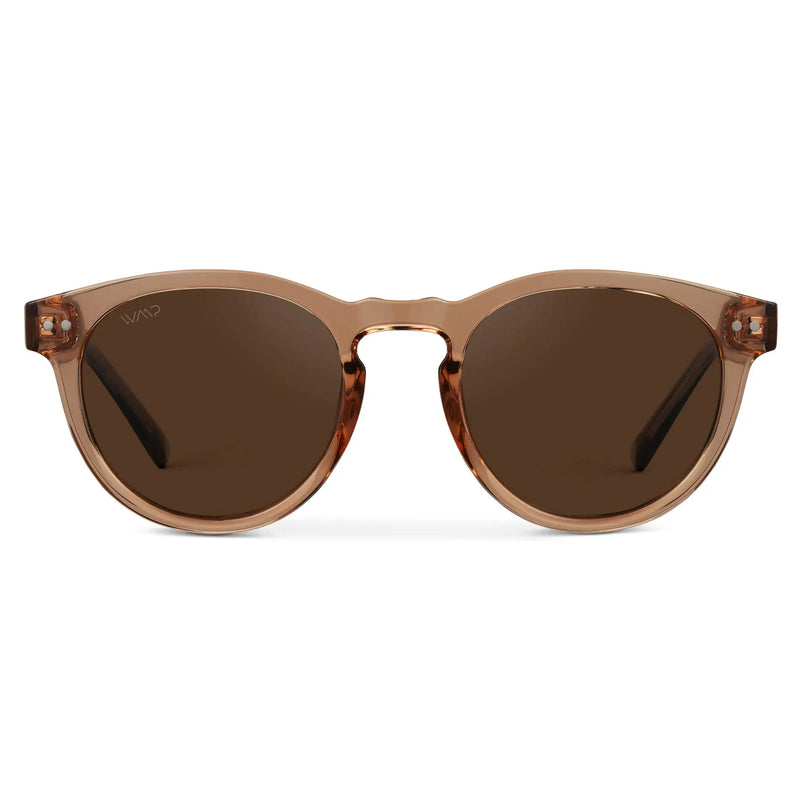
For a classic yet modern look, these circular Tate glasses will never fall out of style. Featuring round-shaped, light crystal brown colored retro frames and plastic lenses, they are a great unisex option. Perfect for a studious look in class while keeping it cool while hanging out with friends.

FAQ's:
What is the main difference between plastic and glass lenses?
The biggest differences are weight and durability. Plastic lenses are lighter and more impact resistant, while glass lenses are heavier but more scratch resistant.
Are plastic lenses better than glass lenses?
For most people, yes. Plastic lenses offer similar clarity, are more affordable, and are much safer since they are less likely to break if dropped.
Do plastic lenses scratch easily?
Plastic lenses can be more prone to scratching than glass, but adding an anti scratch coating helps protect them and keeps them clear over time.
What is the best lens type for sunglasses?
Plastic lenses are typically the best choice for sunglasses because they are lightweight, durable, and easy to tint for different lighting conditions.


